



Brake Pads, Oil Changes, Air Conditioning, and Battery Tips
from a GMC in Kansas City
We’re not all car experts. That’s why we made this guide to help you understand the basics of brake pads, oil changes, vehicle batteries and car air conditioners. Like your body, a car requires maintenance to remain healthy and performing at full capacity. Compare your dehydration to your car’s need for an oil change. If you’re working your car hard, you’re going to need more maintenance than a car that sits in the garage most of the time.
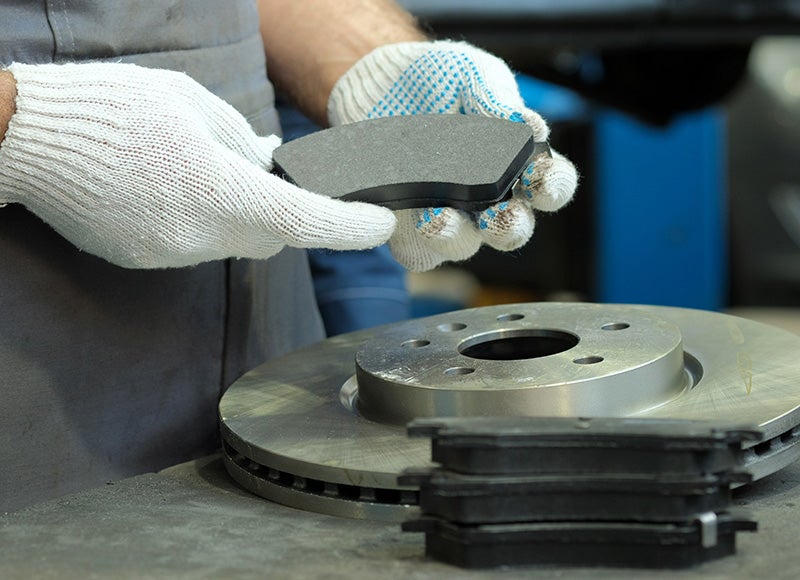
Brake Pads
We’re going to start out with brake pads, a component of the disk brakes. These steel backing plates have friction material bound to the surface that face the disk brake rotor. Their job is to convert the kinetic energy into thermal energy using friction. According to Wikipedia, “two brake pads are contained in the brake caliper, with their friction surfaces facing the rotor”. When the brakes are hydraulically applied, the caliper squeezes the two pads together onto the spinning rotor. This slows and stops the vehicle. Contact with the rotor heats up the brake pads. Small amounts of friction from this transfer onto the disc, creating a dull grey coating. Since the brake pad and disk both have friction material now, they stick together and stop the vehicle.
There are normally two brake pads per disc rotor which are held in place by a caliper attached to the wheel hub or suspension upright. Brake pads need to be replaced regularly, otherwise you have to deal with brake fade. Brake pads have a system where they alert the driver when they need to be changed out. Disc brakes do a better job stopping than drum brakes, and they provide better protection against ‘brake fade’ that can plague you when brake components are overheated. A GMC in Kansas City can give you great advice on how to upkeep your brakes.
Types of Brake Pads
Brake pads come in several variations, ranging in softness, durability, and compound aggressiveness. If you’re using non-standard brake pads, be aware that the operating temperatures may vary. Aggressive brake pads can help if your car is experiencing excessive brake fade. Choosing brake pad material involves several factors: (1) ability to postpone brake fade (2) water effects (3) recovery time from increased temperature or moisture and (4) smooth and even contact with rotor or drum.
Oil Changes
For an oil and filter change, you’ll need to drain the old motor oil and replace it with fresh motor oil. You’ll also replace your oil filter. The factors that affect the lifespan of oil are how you drive, the condition of the engine, and the external environment you drive in. It’s recommended that you get your oil changed every 3,000 to 10,000 miles, so 5,000 miles is a good number to shoot for. Your oil’s lifespan may be shortened by jerky driving, extreme climates, frequent driving on dirt roads, an old engine that burns oil, and heavy load trips.
You have to get your oil changed because it undergoes a thermal breakdown due to hot operating temperature. During this thermal breakdown, the oil becomes less effective as a lubricant. This causes parts of the engine to rub together and wear out. Other reasons for an oil change are the oil’s absorption of water, dust and combustion byproducts and additives that wear out and can no longer neutralize acids. If you don’t change your oil, it will decrease the lifetime of your engine.
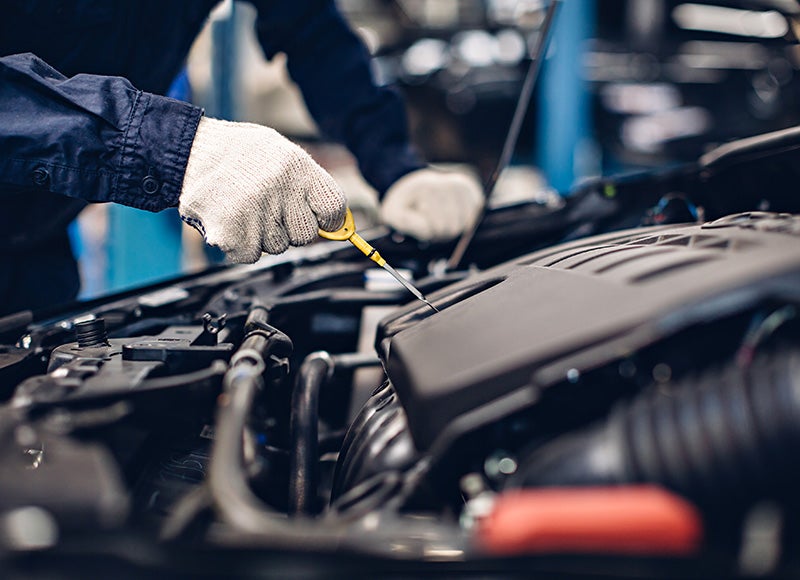
Oil level must be checked every few hundred miles—simply park your car on a level surface, remove an oil dip stick (clean), and reinsert it. This will allow you to check the oil level. At MIN, the oil is at the minimum operating level and is one quart low. Keep in mind that since oil flows slowly when it’s cool, the dipstick may not immediately register the oil just added.
Air Conditioner
Black Death affects a car’s A/C system, originating in the compressor after the refrigerate breaks down. Refrigerant is the working fluid necessary to prevent ugly wear. Once your compressor is worn down, the sharp and grimy metal particles travel through the rest of the A/C system, cutting off cold airflow. This makes for a very hot car ride in the summertime.
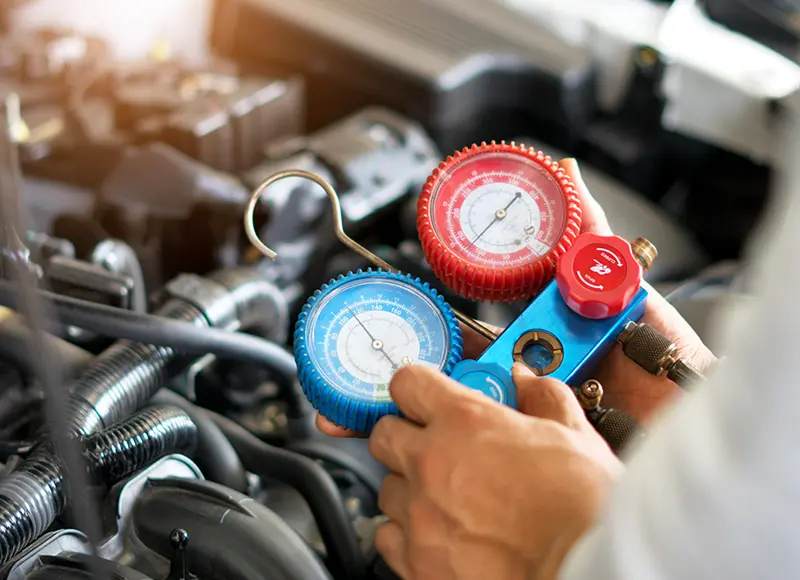
To ensure you don’t have to worry about Black Death, you should get an A/C performance check. They’ll check to make sure that weak airflow hasn’t been caused by mold or mildew, a loose hose, a fried ventilation fan, or faulty seals. When mold or mildew accumulates in the evaporator core from residual moisture, air won’t be able to reach your vents. If you have a loose hose, it’s normally the blower hose that supplies air to the blower unit. If your ventilation fan has gone kaput, air flow will be non-existent. Finally, core case seals, blower house seals and evaporator core case seals can diminish air flow. This is because A/C ventilation systems are sensitive and need to remain sealed.
Other reasons for air conditioner fluid might be a Freon leak (due to a failed seal or hose), a failed compressor or compressor clutch, a failed blower motor, damaged condensers, vacuum leaks, or a failed switch/fuse/relay. When your system gets a leak, an ‘open system’ results. It’s best to detect leaks early so less damage is done. These leaks are normally caused by damage or excessive moisture. If you mix moisture and refrigerant, corrosive acids form and eat away at the seals and components. A faulty compressor clutch happens when the clutch is not engaging with the compressor. It won’t be able to maintain the correct pressure, so your car will only produce hot air. Blown fuses might be another culprit.
If you notice gross odors coming from your A/C system, a dirty or old cabin filter may be the cause. The other reason might be a moldy evaporator case, which occurs when water sits in the evaporator case. The sitting water is caused by the case’s drain being blocked. When this happens, mold accumulates.
Car Batteries
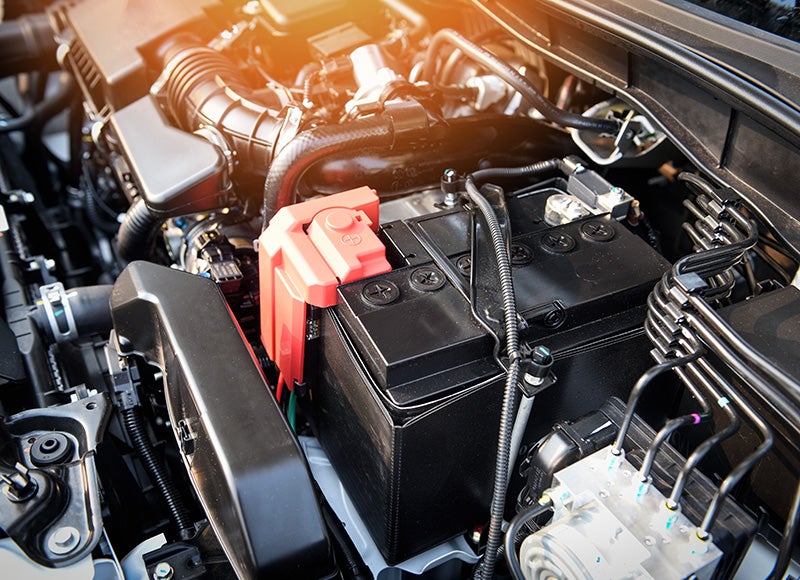
The purpose of the battery is to store energy in chemical form. This energy is released on demand as electricity. The battery allows the vehicle’s ignition system to crank the engine and powers the lights in your vehicle. When your alternator fails, the battery can power the vehicle for a brief amount of time. When your engine is running though, the alternator recharges the battery. However, if you operate electrical items with the engine off (ie: power windows, audio system, headlights), the batter will drain. That’s why people’s car batteries often die at drive-in movie theaters.
You need to be careful when handling the battery, since they contain hydrogen-oxygen gases and sulfuric acid that can inflict serious burns. It’s always a good rule of thumb to wear glasses or goggles and a face shield, avoid leaning over the battery, and work in a well-ventilated area. It may seem like a no-brainer, but you should also keep all ignition sources (cigarettes) away from the battery.
Things to Check
You need to make sure that your water level is adequate if you have an older, unsealed battery. You’ll know you have an unsealed battery if you notice small vent caps on top that can be unscrewed. You’ll need to fill the water up until it reaches the bottom of the cap (using distilled water if you have hard tap water). Pay special attention to water levels during summer months, since heat causes speedy evaporation. Low battery water level can cause the heat generated in the batter to destroy the battery cells.
The terminals (parts marked + and -) should be disconnected before cleaning the connections or removing the battery. Disconnect the negative terminal first, since removing the positive one first can cause a spark and lead to a battery explosion (not fun). Terminals that are encrusted with deposits can be cleaned with a baking-soda and water-dipped wire brush. If not properly cleaned, they can block the flow of electricity. When troubleshooting, you should check the battery cable ends to make sure there isn’t a loose cable. It may need tightening.
To recharge your battery, utilize a trickle charger. Start by leaving it on for 8-10 hours overnight. Unsealed batteries will need to have the vent caps removed and a damp rag placed across the openings. Simply attach the alligator clips onto the charger (red to positive and green/black to negative). Sealed batteries should have a charge indicator window on top—if your battery needs charging, the window will be green or dark. If it’s in need of replacement, the window will be clear or yellow. Keep in mind that typical battery life is about four years.

Contact Us
As a GMC Kansas City dealership, we believe vehicles deserve the utmost care. We hope these tips will help you keep your car running in mint condition for years to come. Feel free to contact us with any questions, or make an appointment for any vehicle services from GMC Kansas City.